Melting Fat: Where Does It Go?
When efforts to limit intake fail, overfeeding occurs, and the excess nutrients are quickly removed and kept, and the relapse to excessive weight starts. This stress to remain to overfeed usually continues until the lost weight returns. In some cases, the organic stress might result in weight gain that surpasses the initial weight. Minimizing body weight to enhance metabolic health and associated comorbidities is a primary goal in dealing with obesity1,2. Nonetheless, preserving weight loss is a significant challenge, especially as the body seems to maintain an obesogenic memory that prevents body weight changes3,4.- Overfeeding rises flowing degrees of leptin and insulin (93) and, with relentless overfeeding during weight reclaim, both leptin and insulin resolve long before the weight is completely gained back (7 ).A key medical goal in managing obesity is to attain considerable weight management (WL), commonly with strenuous dietary and way of living interventions, pharmaceutical treatments or bariatric surgery (BACHELOR'S DEGREE) 2.The cured cells do not simply revitalize, yet remaining fat cells can still enlarge with weight gain.Therefore, leptin and insulin, by themselves, do not appear to sustain the signal of power exhaustion as weight is being restored.
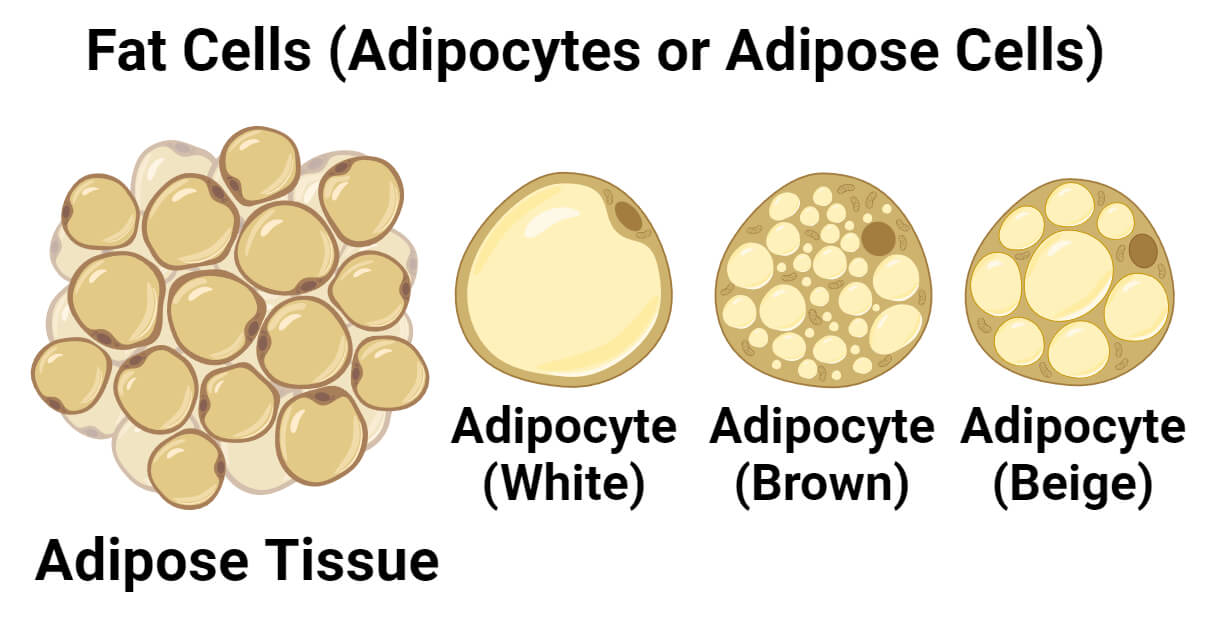
Our epigenetic analysis of adipocytes of the very same cells can act as a description of exactly how these alterations in chromatin access can be kept. Undoubtedly, throughout cell types several DEGs from the obesity time point remained decontrolled after WL (Fig. 2g, h and Extended Information Fig. 7b, c). Weight-loss is accompanied by a remarkable decrease in the size of adipocytes (Fig. 2), which is reversed when weight is gained back (11,13,17-- 19).
Jointly, these neuroendocrine adjustments can act upon fats to affect the dimension and variety of resident adipocytes (Fig. 2). Other researches indicate Go here that both preadipocytes and adipocytes are responsive to Thyroid Stimulating Hormone (TSH) and thyroid hormonal agents in a comparable style (76-- 80). Both the SNS and thyroid hormones have repressive impacts on preadipocyte spreading and stimulatory impacts on preadipocyte differentiation. Thus, a decline in SNS tone and thyroid axis activity throughout weight upkeep might supply liberal conditions for preadipocyte proliferation, while the turnaround of these neuroendocrine inputs throughout weight reclaim might underlie the hyperplasia. While these neuroendocrine inputs provide a plausible description for both metabolic and cellularity adjustments with fat burning and gain back, their real payment to the flexible feedback in adipose tissues calls for refresher course.Adipose Tissue Preserves An Epigenetic Memory Of Weight Problems After Weight-loss
A main professional purpose in handling excessive weight is to achieve appreciable weight-loss (WL), commonly through rigorous dietary and way of living treatments, pharmaceutical treatments or bariatric surgical treatment (BaS) 2. Techniques relying on behavioral and nutritional adjustments often only result in temporary WL and are susceptible to the 'yo-yo' effect, in which individuals regain weight over time3,5,6. This recurrent pattern may be partially attributable to an (obesogenic) metabolic memory that continues even after remarkable WL4,7,8,9,10 or metabolic improvements11,12,13. Undoubtedly, lasting phenotypic changes from previous metabolic states, that is, metabolic memory, have actually been reported Cosmetic Dermatology in computer mouse fat (AT) or the stromal vascular fraction (SVF) 14,15,16, whereas in liver these were reversible15,16,17. Consistent alterations after WL in the immune compartment18, and transcriptional and functional memory of obesity in endothelial cells of lots of organs19,20,21,22, have actually additionally been reported.Differential Analysis Of Hptms And Atac-- Seq
Value between T0 and T1 for e-f was determined utilizing paired numerous Wilcoxon examinations with Benjamini, Krieger and Yekutieli post hoc examination for multiple comparisons. A, b, Cluster markers used for annotating cell clusters in human omAT of the MTSS (left) and LTSS (right) research study. C, d, UMAP visualization standing for omAT pools from the MTSS study (c) and LTSS study (d) coloured by anticipated cell subtypes from the Emont et al. natural AT dataset from White people. Feature plots showing recommendation mapping scores illustrating just how well omAT dataset maps to the Emont et al. dataset.The most crucial takeaway for individuals is that this is a contouring procedure, not a global fat burning solution. The results can look purposeful in the treated location, yet they rely on anatomy, follow-through, and the truth that continuing to be fat cells can still enlarge later on. As soon as damaged, fat cells are broken down and normally eliminated over weeks to months as the body processes them in phases. The process called cryolipolysis utilizes regulated cooling to freeze fat in a selected area.
The decrease in leptin is extra intuitive due to the fact that it is produced directly from adipocytes. The effect on insulin is indirect, showing the improvement in insulin sensitivity that occurs with weight reduction (81-- 84). Surprisingly, a variety of studies have actually observed that leptin and insulin are in fact reduced to a greater degree than would certainly be anticipated for the quantity of fat mass (11,21,65,85,86).Here are the 14 ideal means to shed fat quickly and enhance calorie burning. A, Gene counts and the variety of unique molecular identifiers (UMIs) per problem of mouse epiAT samples. B, UMAP visualization standing for integrated epiAT examples from the weight management research study (C, CC, CCC, H, HH, HC, HHC) and from the "yoyo" study (CCH, HCH) coloured by forecasted cell subtypes from the Emont et al. mouse epididymal AT dataset. Feature stories revealing referral mapping ratings illustrating exactly how well these datasets maps to the Emont et al. dataset. C, genetics matters and the number of UMIs per cell type from mouse epiAT examples. The presence of a presumptive obesogenic epigenetic memory in adipocytes and possibly various other cells suggests new possible healing methods to improve WL upkeep in human beings. Also if some treated fat cells are removed from the area, staying fat cells still exist neighboring and in untreated areas. Those cells can still increase the size of later on if a patient experiences weight gain. Depending on the modern technology, both ideas may be reviewed, but many preferred treatments are particularly developed to make sure that fat cells pass away through regulated injury. In cryolipolysis, for instance, exposure to cold can activate fat cell fatality without harming most surrounding tissue. If you have had problem with persistent, continuous weight gain, you comprehend the difficulty of subjugating the fat cell! 